
Your website is the digital front door of your business. Long before a prospective client picks up the phone, schedules an office visit, requests a custom quote, or completes an online checkout, they look you up online. Your digital presence serves as the baseline for your brand’s credibility, authority, and value proposition.
When properly architected, a website functions as a 24/7 sales representative that attracts target traffic, nurtures trust, and consistently converts passive visitors into qualified sales leads. However, web standards, search algorithms, device behaviors, and user expectations evolve continuously. A platform that looked cutting-edge a few years ago can quickly become clunky, slow, and off-brand.
If your online presence is no longer driving meaningful business outcomes, it may be time for a comprehensive overhaul.
Understanding the Life Cycle of a Business Website
Digital assets do not remain static. On average, a modern corporate website has an operational lifespan of two to four years before requiring significant structural, technical, or aesthetic updates. Beyond this window, accumulated technical debt, shifting design trends, and changing customer expectations begin to erode performance.
Sign 1: Your Website Looks Visually Outdated
First impressions online are formed within milliseconds. When users land on a website, they immediately make snap judgments about the business’s professionalism, stability, and relevance.
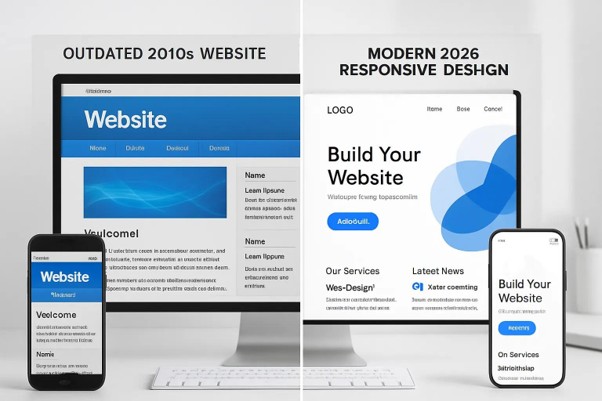
Design standards have shifted away from crowded layouts, heavy textures, chaotic navigation bars, and tiny body copy. Modern design prioritizes clean visual hierarchy, intentional whitespace, concise messaging, high-resolution media, and intuitive pathways.
Key Indicators of an Outdated Design
- Inconsistent Visual Hierarchy: Mismatched fonts, disjointed color palettes, and unbalanced page structures.
- Dense Text Blocks: Pages packed with long paragraphs instead of scannable, structured content.
- Misaligned Branding: The site reflects the services, size, or messaging you had years ago rather than your current market positioning.
- Legacy Design Elements: Outdated stock graphics, flash elements, or tiny text sizes that fail to match modern UI standards.
If a prospective buyer compares your website against a competitor whose platform is clean, fast, and modern, they will naturally associate the modern interface with better service quality. A visual refresh updates your brand image to re-establish market authority and build immediate user trust.
Sign 2: Your Website Delivers a Poor Mobile Experience
Mobile traffic accounts for more than half of all global web browsing. Consumers use smartphones and tablets to discover brands, read reviews, compare pricing, and complete transactions. If your platform is built primarily for desktop monitors and degrades on smaller screens, you are actively driving away potential business.
A non-responsive site forces users to pinch, zoom, side-scroll, or fight unoptimized forms. Beyond frustrating real people, poor mobile usability actively harms your organic search traffic. Search engines like Google prioritize mobile-first indexing, meaning they evaluate the mobile version of your site to determine search rankings. If your mobile experience is broken, your visibility on search engine result pages (SERPs) will drop significantly.
Common Mobile Usability Issues
- Navigation menus that break or cover main content on smaller displays.
- Text sizes that shrink down to unreadable proportions.
- Contact forms with input fields that are difficult to tap on touchscreens.
- Images and tables that bleed past the horizontal viewport boundary.
Sign 3: Sluggish Page Load Times and Technical Debt
In modern web browsing, performance is everything. Today’s users expect pages to load in under three seconds. Every additional second of delay increases bounce rates, causing visitors to abandon your site before reading a single line of copy.
Slow load times stem from several underlying technical issues
While minor performance issues can sometimes be patched with caching tools or image compression plugins, persistent, site-wide slowness points to deep architectural flaws. When slow performance is tied to legacy software frameworks or messy database structures, a complete rebuild provides a cleaner, long-term fix.
Beyond keeping visitors on your site, page speed is a confirmed ranking factor for major search engines. A fast-loading site directly improves organic discoverability, user retention, and overall conversion metrics.
Sign 4: Confusing Navigation and Frustrating User Journeys
An aesthetically pleasing site can still fail if users cannot navigate it efficiently. When prospective customers arrive at your domain, they usually have specific questions:
- What specific products or services do you offer?
- Is this solution right for my specific problem?
- Why should I trust your company over alternatives?
- How do I buy, book, or contact your team?
If users have to hunt through messy, multi-level dropdown menus or dig through unstructured content to find simple answers, they will give up and navigate away.
A well-structured redesign simplifies your site map, streamlines page architecture, and establishes a clear path to conversion. Strategic User Experience (UX) design guides visitors logically from initial awareness to final action without unnecessary friction.
Sign 5: You Have Traffic, But No Leads or Conversions
Perhaps the most critical indicator that your site needs an update is a lack of tangible business leads. If your analytics platform shows steady traffic, but you receive few contact forms, consultation bookings, or phone inquiries, your conversion pipeline is broken.
Traffic without conversions means your site is failing to turn attention into sales. Common causes include:
- Missing or Weak Calls to Action (CTAs): Pages lack clear, compelling directions like “Request a Quote,” “Schedule a Call,” or “Get Started Today”.
- Vague Messaging: Copy focuses heavily on corporate jargon rather than explaining clear customer benefits.
- High-Friction Conversion Steps: Contact forms require too many fields, creating unnecessary resistance for users.
- Lack of Social Proof: Missing reviews, case studies, or client testimonials that validate your business authority.
A strategic redesign focuses heavily on Conversion Rate Optimization (CRO). By aligning content structure, value propositions, and action prompts, a redesigned platform turns existing traffic into a predictable engine for business growth.
Strategic Comparison: Targeted Fixes vs. Full Redesign
Not every performance issue requires building a site from scratch. It is crucial to diagnose whether your platform needs targeted updates or a complete overhaul.
| Operational Metric | Targeted Tweaks/Maintenance | Complete Website Redesign |
|---|---|---|
| Primary Goal | Resolve isolated technical issues. | Realign the platform with brand, tech, and sales goals. |
| Visuals & Branding | Minor CSS tweaks, updating photos. | Complete overhaul of UI/UX, layouts, and brand identity. |
| Mobile Adaptability | Fixing minor element misalignments. | Rebuilding content layouts with a mobile-first framework. |
| Site Architecture | Adding new blog posts or single pages. | Reorganizing navigation, page structures, and user flows. |
| Technical Stack | Updating plugins, basic caching tools. | Replacing outdated legacy code base and CMS structures. |
| Conversion Strategy | Swapping out CTA button colors or text. | Restructuring the conversion funnel across every core page. |
If your platform suffers from only one minor issue—such as a single slow page—targeted maintenance is usually enough. However, if your business faces a combination of outdated visuals, broken mobile layouts, slow speeds, and low conversions, attempting incremental patches will cost more time and money in the long run. A comprehensive rebuild addresses these compound issues systematically.
Transforming Your Website Into an Active Growth Asset
Your corporate website should be a dynamic business tool that grows alongside your company. Treating your digital platform as a static, one-time investment leaves your business vulnerable to competitors who continuously optimize their online user experience.
A modern redesign addresses structural bottlenecks, aligns your online presence with current industry standards, and delivers a fast, intuitive experience for your prospective clients.
Partnering with an experienced development team helps ensure your new platform is built with clear strategy, responsive design, optimized speed, and robust conversion pathways. Companies like Meta Labs help businesses transform legacy websites into powerful growth engines designed around actual audience behavior and clear business targets. If your current platform shows any of these five red flags, it is time to audit your digital presence and invest in a strategic web redesign.